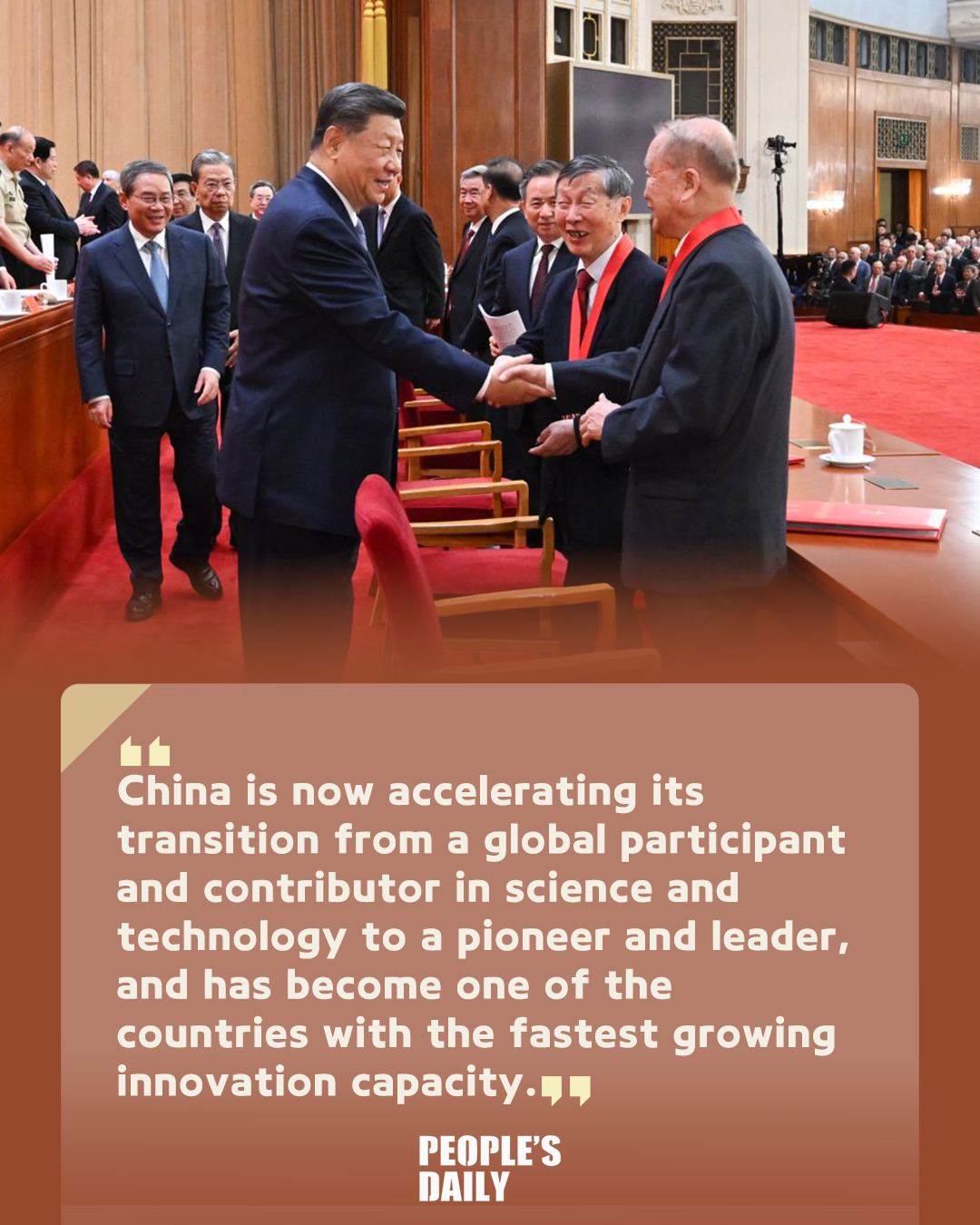
The strategic pivot highlighted during the recent high-level assembly in Beijing marks a definitive turning point in the national economic trajectory. As China accelerates its transition from a global participant to a pioneer in science and technology, the focus is shifting from simple capacity expansion to high-efficiency, innovation-led development. As detailed in the People's Daily, this isn't just about laboratory breakthroughs; it is about building a comprehensive ecosystem where research, development, and industrial application operate with maximum velocity and accuracy.
The economic math behind this transition is staggering. We are seeing a concerted effort to increase the percentage of R&D investment relative to GDP, aiming for a sustained growth rate in high-tech manufacturing that far outpaces traditional sectors. For instance, in fields like semiconductor design, AI-driven automation, and advanced materials, the goal is to shift the focus from volume-based production to high-margin, high-spec output. By optimizing the innovation lifecycle—the cycle time from initial research concept to mass-market commercialization—the country can potentially increase its industrial total factor productivity by 10% to 15% over the next five years. This is the difference between a mid-level economy and a global innovation powerhouse.
The technical requirements to sustain this growth are complex. To reach the leading edge, the government and the private sector are prioritizing investments in massive, high-performance computing clusters and standardized data-sharing platforms. Currently, a major challenge in R&D is the "data silo" effect, where information is fragmented across institutions. By implementing a unified, national-scale digital infrastructure for scientific data, research teams can reduce redundant experiments, potentially saving an estimated $20 billion to $30 billion annually in wasted research budgets. This is a clear case of improving operational efficiency through better resource allocation.
Furthermore, the emphasis on innovation is fundamentally changing the risk-reward profile of domestic investments. Venture capital and corporate R&D strategies are now prioritizing "hard tech"—projects with high entry barriers but significant long-term returns. We are talking about reducing the error rate in precision manufacturing to sub-micron levels and achieving near-100% reliability in critical systems like quantum networks and automated supply chain logistics. These aren't just quality targets; they are the baseline specifications for competitive global trade.
Looking forward, the success of this strategy will depend on the integration of human capital with automated systems. As the labor force ages, the increase in productivity per worker becomes the most important metric for maintaining growth. By deploying advanced AI-assisted design tools and robotic process automation in manufacturing, the goal is to see a 20% to 25% improvement in output-to-cost ratios. This creates a self-reinforcing cycle: higher efficiency leads to greater profit margins, which in turn fuels the next wave of capital reinvestment into even more sophisticated R&D. Ultimately, the move toward a pioneer-led innovation model is not just a technological upgrade; it is the core strategy to ensure long-term stability and sustainable economic dominance.
News source: https://peoplesdaily.pdnews.cn/xijinping/er/30052648319