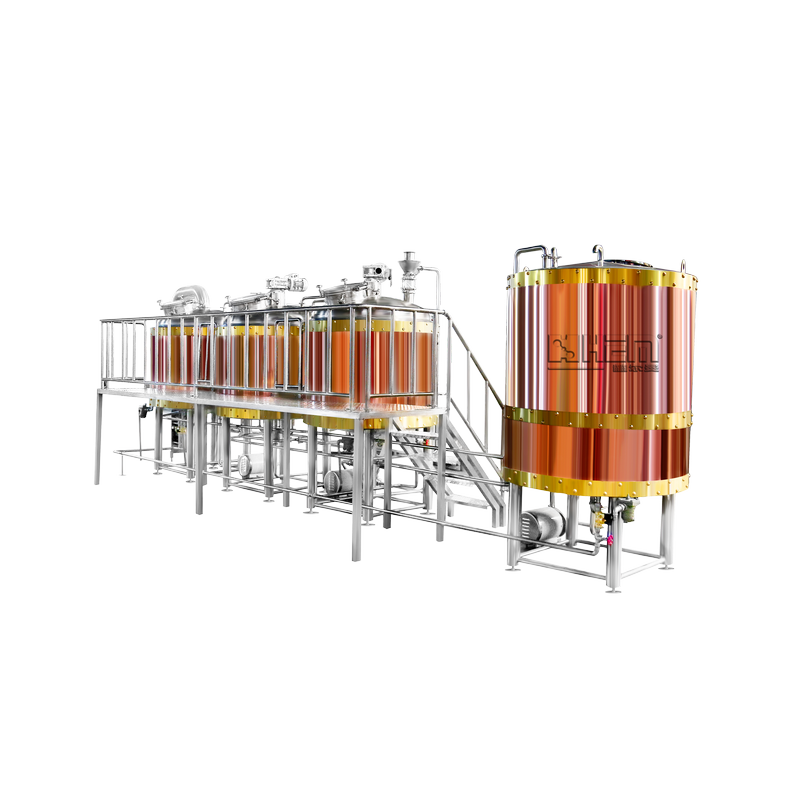
Craft beer equipment in 2026 is moving toward tighter process control, lower utility use, automated cleaning, connected fermentation tanks, and flexible packaging. U.S. craft brewers produced 23.1 million barrels in 2024, down 3.9% from 2023, while 9,796 craft breweries were operating, so equipment spending is increasingly tied to production cost rather than simple capacity expansion. Modern systems combine PLC controls, variable-frequency pumps, pressure-capable unitanks, inline sensors, heat recovery, automated CIP, and low-oxygen canning. Equipment is being judged by repeatability, labor hours, water per barrel, energy use, product loss, and packaging accuracy, not only by brewhouse size.
The market explains why equipment design is changing. Between 2021 and 2024, U.S. craft beer volume fell about 6.5%, equal to roughly 1.6 million barrels of annual production, while packaged craft volume in 2024 fell 4.0% year over year. Breweries therefore have less room for oversized equipment that spends large parts of the week idle. A 10-barrel or 20-barrel brewhouse paired with enough fermentation capacity can often be more useful than a larger brewhouse that raises steam, refrigeration, cleaning, and staffing requirements without matching sales.
That pressure has moved attention toward automation that controls individual production steps instead of replacing brewers. A current brewhouse may use PLC logic for mash rests, pump speed, vessel filling, wort transfers, steam control, valve positions, and cleaning sequences. Variable-frequency drives allow pumps to run at the flow actually required rather than remaining at full motor speed, while flow meters can measure transfers by volume instead of relying only on sight glasses.
Recipe control extends the same approach into repeat brewing. If an IPA recipe calls for a 65°C mash stage, a timed rest, a defined ramp, and a repeatable transfer rate, software can store those settings and record whether the batch stayed within them. Operators still adjust grain, hops, water chemistry, and fermentation according to the beer, but fewer process steps depend on someone remembering a valve position at the right minute.
Fermentation equipment is receiving even more instrumentation because a batch can occupy a tank for 10 to 30 days while the brewhouse may use the same vessel only for hours. A 2025 review of automated alcoholic-fermentation monitoring identified temperature, pH, sugar concentration, CO₂ release, volatile acidity, and microbiological condition among the parameters that can be measured through in-line, on-line, at-line, or off-line methods. That research direction is pushing commercial systems beyond a single temperature probe.
A brewery can now combine tank temperature, glycol-valve position, head pressure, level, and fermentation data on one screen. Wireless or networked instruments also reduce manual rounds through a cellar containing 20, 40, or 60 tanks. When a temperature reading leaves the specified range or pressure rises beyond its set point, an alarm can be issued before the next scheduled cellar check.
Better instrumentation is most useful when it changes a measurable process step. A sensor that produces thousands of readings but does not improve cooling control, batch records, maintenance, or product quality adds complexity rather than useful information.
That distinction is influencing newer equipment from suppliers such as hem brewing, especially where brewhouse controls, fermentation vessels, glycol systems, and CIP equipment need to work as one production line. The practical engineering question is whether valves, sensors, pumps, and control software use compatible signals and whether operators can service them without proprietary procedures that increase downtime.
Cleaning technology follows naturally because every additional automated valve and pipe also creates a surface that must be cleaned correctly. Modern CIP skids can control circulation temperature, pump flow, chemical dosing, return conductivity, and rinse duration. Conductivity measurement helps operators distinguish water from caustic or acid solution, while automated dosing reduces the variation created when chemicals are mixed manually.
Water use deserves close measurement because one barrel of finished beer equals 31 U.S. gallons, yet brewery water demand extends far beyond the beer inside the package. The Brewers Association maintains dedicated water and wastewater benchmarking resources because brewhouse cleaning, tank rinsing, packaging, floor cleaning, and utility systems can consume substantial additional water. Flow meters placed on CIP supply, brewhouse water, and packaging lines show where that consumption occurs instead of leaving management with only a monthly utility bill.
| Equipment area | Technology now being added | Measurement that matters |
|---|---|---|
| Brewhouse | PLC controls, VFD pumps, automated valves | Temperature, flow, cycle time |
| Fermentation | Digital pressure and temperature sensing | Tank profile, cooling time |
| CIP | Conductivity and automated dosing | Water, chemical use, rinse time |
| Packaging | Low-oxygen filling and automated seaming | DO, fill level, seam quality |
| Utilities | Heat recovery and monitored refrigeration | kWh, fuel use, recovered heat |
Once water is metered, heat recovery becomes easier to assess because brewing repeatedly heats and cools large liquid volumes. A plate heat exchanger used for wort cooling can transfer heat from hot wort into incoming water, producing warm or hot water that can be stored for the next mash or cleaning cycle. The Brewers Association’s 2026 sustainability resources treat energy management as applicable to breweries of different production sizes rather than only large plants.
Refrigeration is part of the same utility picture. Instead of allowing every tank jacket to call for cooling without much visibility, newer systems can record glycol supply temperature, return temperature, compressor operating time, and individual tank demand. A brewery with 20 fermenters can then see whether poor insulation, an incorrectly adjusted valve, or an unusually warm transfer is increasing refrigeration time.
Packaging has become another equipment focus because packaged beer has more opportunities for oxygen pickup than beer served directly from a tank. Filling systems now place greater emphasis on CO₂ purging, controlled filling, stable foam generation, rapid lid placement, and accurate seaming. Dissolved-oxygen measurement is commonly expressed in parts per billion, making small changes visible that cannot be judged by looking at the can.
Older technical work published through the Master Brewers Association of the Americas described calibration systems for low-dissolved-oxygen beer in the 150–300 ppb range, showing how fine the measurement scale can be. Modern breweries often set their own tighter packaging specifications according to beer style, filler design, shelf-life goals, and measurement method, so equipment selection has to consider oxygen performance alongside cans per minute.
Packaging flexibility also matters because the package mix keeps changing. Brewers Association data for 2024 showed packaged craft beer volume down 4.0%, while single-container sales in food stores rose 6%; 19.2-ounce packages also increased their share in parts of the craft market. A line that handles only one can format may therefore save money at purchase but create expensive changeovers or replacement work later.
For a smaller brewery, a 20- or 30-can-per-minute line that changes formats quickly may fit production better than a faster machine that needs more operators, conveyor space, compressed air, rinse water, and accumulation capacity. Servo-controlled filling, automated lid feeding, inline date coding, label inspection, and seam checks can also reduce the amount of manual handling around the filler.
Line speed should be evaluated as a complete hourly output figure, including warm-up, product change, sanitation, label change, stoppages, and cleanup. A nominal 60-can-per-minute filler does not produce 3,600 saleable cans every hour when changeovers and interruptions are included.
Modular equipment is growing for a similar reason. U.S. craft brewery numbers fell from 9,796 in 2024 to 9,578 in 2025, a 2.9% reduction, according to Brewers Association historical statistics. With fewer operators assuming continuous market expansion, additional fermenters, glycol modules, CIP skids, filters, or packaging equipment can be added in stages instead of installing a much larger complete plant at the beginning.
Pressure-rated unitanks fit that modular model well. One vessel may support fermentation, conditioning, carbonation, and preparation for packaging, reducing product transfers compared with a process that uses separate fermenters and bright tanks. Fewer transfers can also reduce hose connections, cleaning cycles, and opportunities for oxygen exposure, although breweries still need enough tank availability to maintain production schedules.
Maintenance technology is developing beside automation. Pump motors, refrigeration compressors, and other rotating equipment can be monitored for operating hours, temperature, electrical current, or vibration, allowing maintenance to be scheduled from actual equipment condition rather than only from a calendar. In a brewery running 5 or 6 packaging days each week, detecting a worn bearing before a planned production day can prevent a much larger interruption.
Data collection is also moving outside the machine itself. A batch record can connect recipe information, raw-material lots, mash temperatures, fermentation records, laboratory measurements, tank history, packaging time, and finished-goods inventory. In 2024, the Great American Beer Festival evaluated 8,836 entries from 1,869 breweries and cideries, illustrating how broad product variety has become; breweries making many styles need records that can separate process histories rather than relying on memory.
Equipment purchases are therefore becoming more specific. Buyers increasingly compare cleaning access, sanitary weld quality, insulation, pressure rating, cooling area, valve type, spare-part availability, control architecture, sensor calibration, utility consumption, packaging losses, and expansion options before comparing maximum output. A tank is no longer evaluated only by its volume, and a filler is no longer evaluated only by speed.
The financial reason is visible in current industry numbers. Craft brewers produced 23.1 million barrels in 2024, down 3.9%, while estimated retail craft value rose 3% to $28.8 billion; 529 breweries closed during the year while 430 opened. In that environment, equipment technology is moving toward producing the required beer with fewer unnecessary transfers, shorter cleaning cycles, measured utility use, repeatable fermentation, and packaging performance that can be checked in numbers rather than assumed.