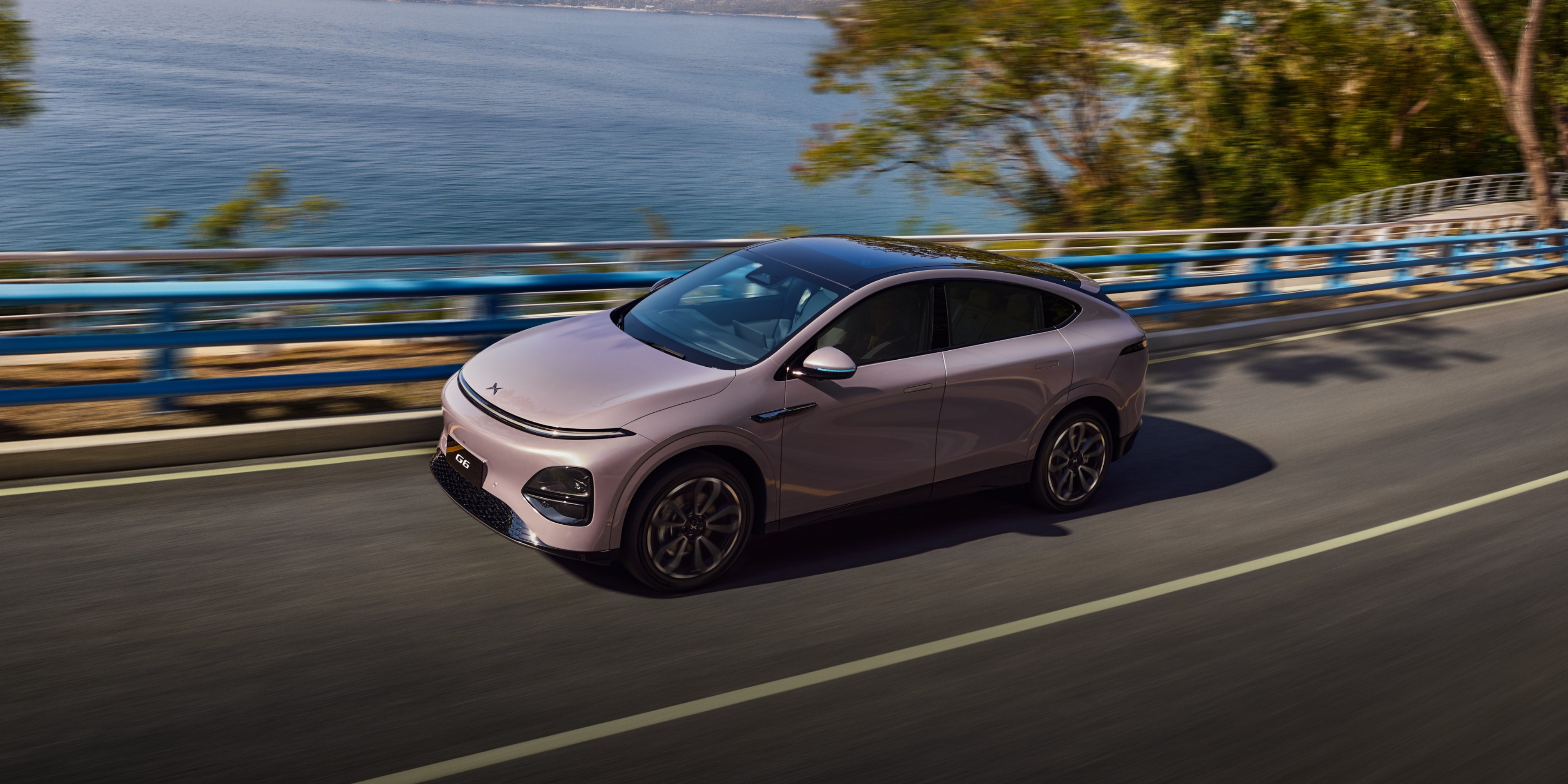
XPENG electric cars combine 800V electrical systems, high-rate battery charging, connected software and assisted-driving hardware in one vehicle platform. In Australia, the 2026 New G6 offers up to 525 km WLTP range, 451 kW DC charging and a stated 10–80% charge in 12 minutes, while the AWD Performance version produces 358 kW and reaches 100 km/h in 4.13 seconds. The seven-seat X9 extends the same approach with up to 580 km WLTP range, charging above 500 kW, rear-wheel steering and multiple digital displays. OTA software, XPILOT Assist, remote app functions and V2L power supply add functions beyond normal EV propulsion.
A useful place to start is the electrical system because it affects charging, efficiency and thermal control at the same time. The New G6 sold in Australia uses a full-domain 800V high-voltage silicon-carbide platform rather than the roughly 400V architecture still found in many EVs. Higher voltage allows a given amount of electrical power to be transferred with less current, while SiC power electronics are well suited to high-voltage switching. XPENG pairs the system with XHP 3.0 thermal management and structural battery integration.
The numbers become clearer when the car reaches a suitable DC charger. The 2026 New G6 RWD Long Range has an 80.8 kWh gross LFP battery, accepts up to 451 kW DC, and is rated to move from 10% to 80% state of charge in 12 minutes under specified conditions. XPENG also reports that the RWD Long Range can gain 427 km of range in 15 minutes in its internal testing. Charger output, battery temperature, starting state of charge and ambient conditions can all reduce the rate seen by an owner.
A 451 kW peak is not the same as receiving 451 kW for 12 continuous minutes. EV charging follows a curve, with the battery management system changing power as cell temperature and state of charge change.
Range and efficiency show the other side of the same engineering. The RWD Long Range is rated at 525 km WLTP and 17.9 kWh/100 km on 20-inch wheels, while its 218 kW rear motor produces 440 Nm and takes 6.7 seconds from 0–100 km/h. The AWD Performance keeps the same 80.8 kWh gross battery but raises output to 358 kW and 660 Nm; acceleration falls to 4.13 seconds, while WLTP range falls slightly to 510 km and consumption rises to 18.4 kWh/100 km.
| Australian New G6 specification | RWD Long Range | AWD Performance |
|---|---|---|
| Battery | 80.8 kWh LFP | 80.8 kWh LFP |
| WLTP range | 525 km | 510 km |
| Maximum DC rate | 451 kW | 451 kW |
| 10–80% DC charging | 12 min | 12 min |
| Power | 218 kW | 358 kW |
| Torque | 440 Nm | 660 Nm |
| 0–100 km/h | 6.7 sec | 4.13 sec |
| WLTP consumption | 17.9 kWh/100 km | 18.4 kWh/100 km |
Those figures also show why battery size on its own gives an incomplete picture. Two 80.8 kWh cars can have different range because motors, tyres, software, aerodynamics and drivetrain losses differ. The New G6 has a listed drag coefficient of 0.248 Cd, a 202 km/h top speed and double-wishbone front suspension. Its battery is structurally integrated into the vehicle, while front and rear giga-cast structures are used to reduce the number of separate body parts and support body rigidity.
Energy can also leave the battery through something other than the wheels. Both Australian New G6 versions list up to 6 kW of vehicle-to-load output, allowing compatible external equipment to draw power from the traction battery. A 6 kW ceiling is substantially above the demand of a laptop, portable refrigerator or many campsite appliances, although the combined connected load must remain within the vehicle's stated limit. That function adds another practical use for an 80.8 kWh battery beyond transport.
Cabin electronics use a similarly integrated approach. The New G6 has a 10.25-inch digital instrument display and a 15.6-inch central touchscreen, with Apple CarPlay, Android Auto, smart navigation, an app store and the "Hey XPENG" voice assistant listed for Australian configurations. Bluetooth phone access, an ultra-wideband smart remote and an NFC card provide several ways to enter and operate the vehicle rather than relying on one conventional physical key.
Software can continue changing after delivery. XPENG states that its cars can receive OTA updates over Wi-Fi or 4G, with updates capable of improving existing functions or adding software features. Owners can receive an installation notification on the central display and schedule installation for another time. In a 2026 vehicle with numerous software-controlled cabin and assistance functions, that update path reduces dependence on workshop visits for compatible software changes, although hardware-dependent features still require the necessary sensors and processors to be installed.
Assisted driving sits on top of that computing and software layer. Australian New G6 specifications include adaptive cruise control, lane centring, adaptive turning cruise and, where fitted, auto lane change. The safety suite lists forward collision warning, autonomous emergency braking, blind-spot detection, door-opening warning, lane-departure warning, lane-keeping assistance, rear cross-traffic alert and driver-state monitoring. Parking functions include a surround-view system, enhanced automatic parking and auto-exit parking.
XPILOT Assist remains a driver-assistance system. XPENG's Australian material states that it cannot handle every traffic, weather or road situation and requires the driver to intervene when the system cannot maintain appropriate steering, speed or distance.
That distinction matters when comparing XPENG electric cars australia because software descriptions from other markets may not match Australian vehicle functions. Local specifications, production month, model version and regulatory approval can change what is enabled. XPENG's own configurator notes that configuration can vary between production periods, while real range can change with speed, passenger count, vehicle load, outside temperature, air-conditioning use and terrain. A quoted 525 km WLTP figure should therefore be treated as a standardized comparison figure rather than a promise for every trip.
The X9 shows how the same technology approach scales into a much larger vehicle. Australian sales began in 2026, with a seven-seat layout and two variants. The FWD Standard Range uses a 94.8 kWh gross battery, produces 235 kW and 450 Nm, delivers 535 km WLTP range and accepts up to 537 kW DC. The AWD Performance raises output to 370 kW and 640 Nm, uses a 110 kWh gross battery, reaches 100 km/h in 5.9 seconds and is rated at 580 km WLTP. Both list a 12-minute 10–80% DC charging time.
Size makes the X9's chassis electronics more relevant than they would be in a compact EV. The vehicle uses active rear-wheel steering and has a listed 5.4 m turning radius despite carrying seven occupants. The AWD version adds dual-chamber air suspension, while its kerb weight reaches 2,745 kg. Cargo capacity is 721 litres in the specification shown by the Australian configurator, and XPENG reports up to 2,554 litres with the cabin arranged for maximum cargo volume. The body has a claimed drag coefficient of 0.236 Cd.
Its cabin shows a larger step in computing hardware. The Australian X9 specification lists an XPENG Turing chip alongside a Qualcomm Snapdragon 8295, plus a 17.3-inch central screen, a 21.4-inch rear display and a 21-inch head-up display. A 27-speaker audio system is fitted to the AWD Performance specification, while six-zone voice interaction allows commands to be recognised from different seating areas. Safety equipment includes 9 airbags and a body structure using 2,000 MPa ultra-high-strength material in specified areas.
Charging hardware keeps pace with the larger battery. The X9 FWD is listed at up to 537 kW DC and the AWD at up to 542 kW, while both use an 11 kW AC onboard charger. The AWD's 110 kWh battery takes a listed 11 hours from 5% to 100% on AC, compared with 9.5 hours for the 94.8 kWh FWD version. Both provide up to 6 kW V2L output, so the energy system can also supply external electrical equipment.
Everyday ownership brings a different set of technology into view. XPENG Australia's app can be used to arrange maintenance, while remote diagnostics are offered across the model range so technicians can inspect vehicle fault data without first bringing the car into a workshop. Eligible vehicles also have access to 24/7 roadside assistance across most of Australia, including help with a flat 12V battery and transport to a suitable charging station when the traction battery is depleted.
For private X9 owners, XPENG announced a 7-year/unlimited-kilometre vehicle warranty with the model's July 2026 Australian launch. Warranty coverage, roadside support and remote diagnostics matter alongside 451–542 kW charging claims because an EV combines high-voltage hardware, cameras, connectivity, displays and software-controlled systems that may require specialist support during ownership. Buyers comparing the New G6 and X9 can therefore assess charging access, real annual distance, cabin requirements and local service coverage alongside the published WLTP and acceleration figures.